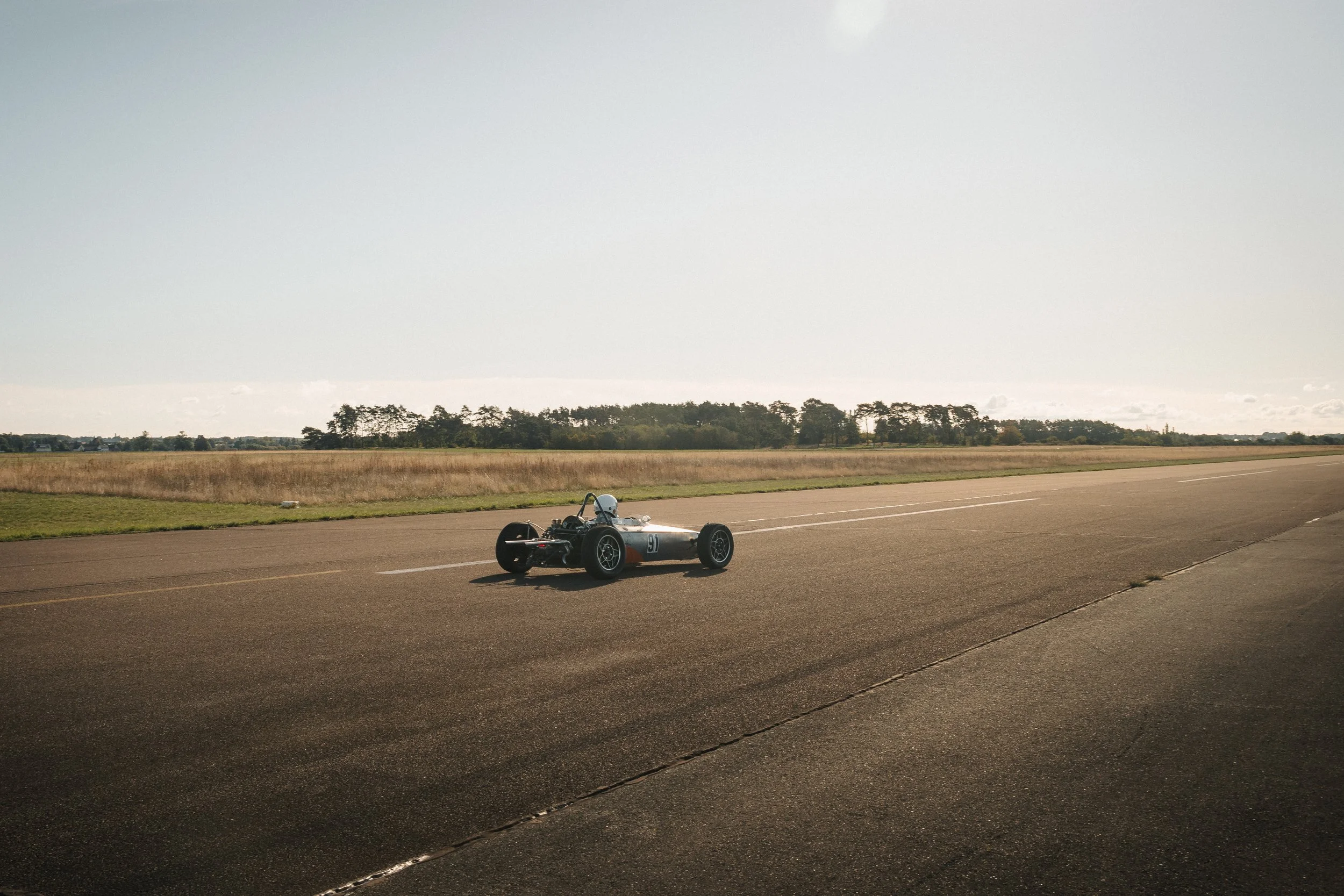
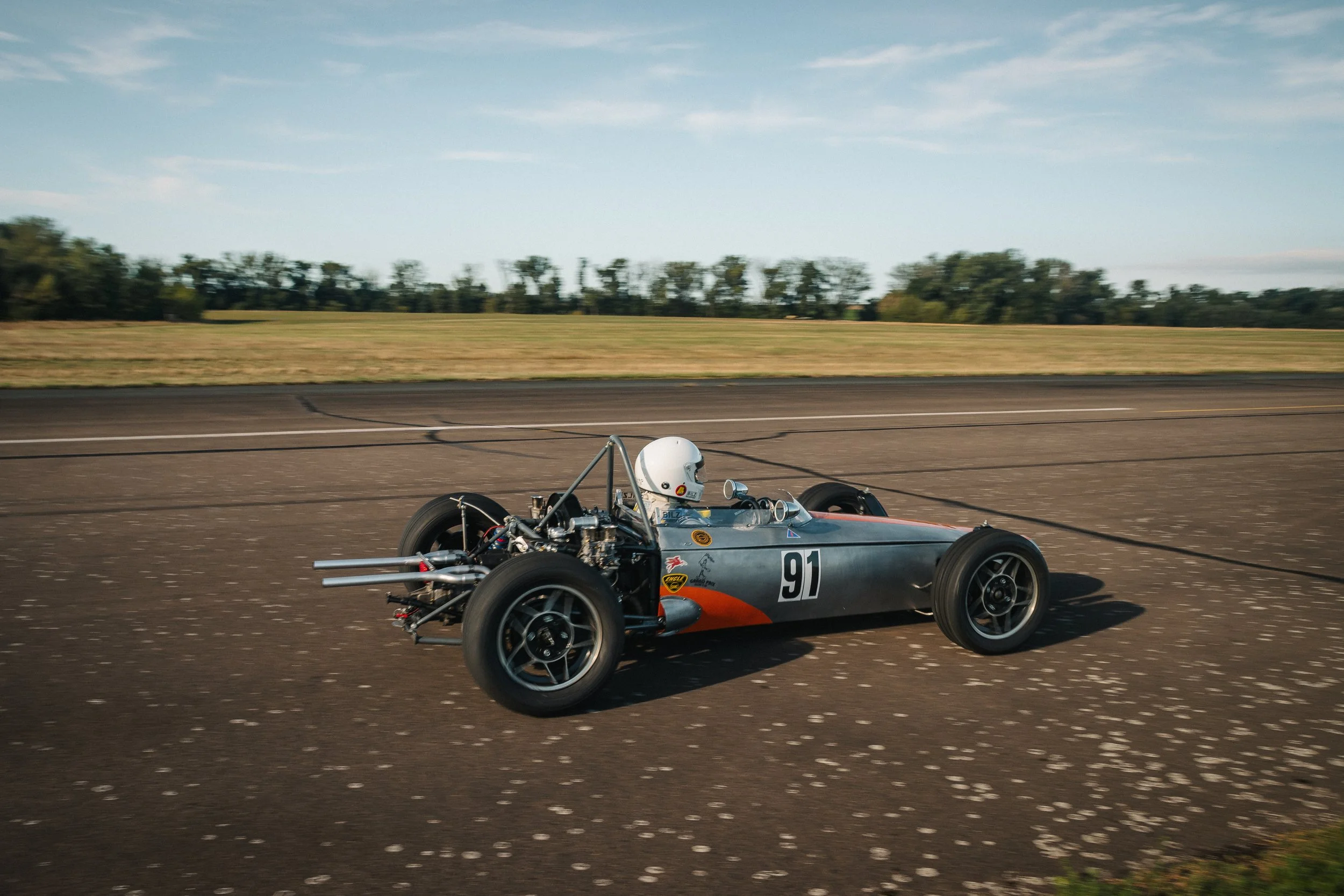
Melkus Typ 64
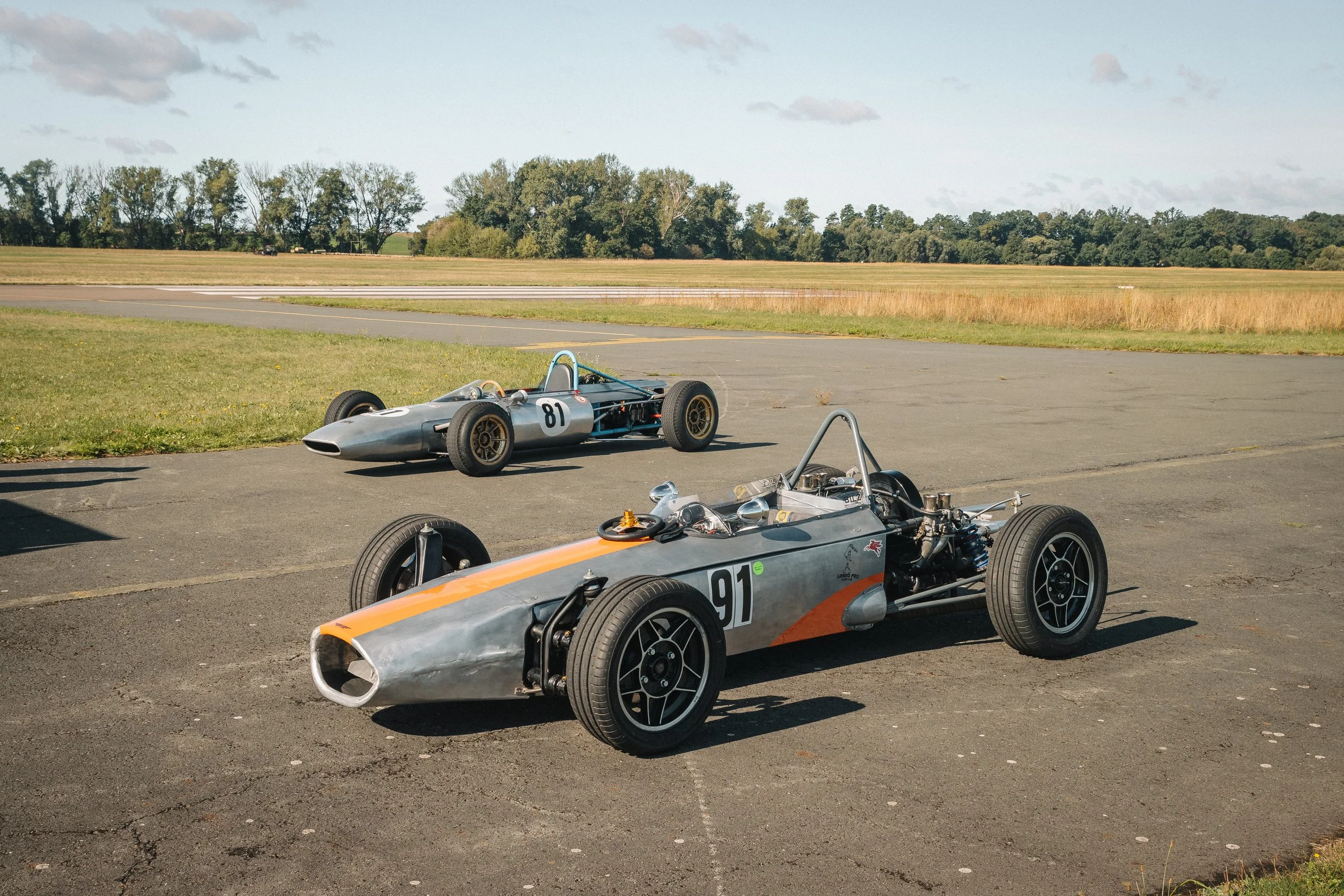
Nummer 81
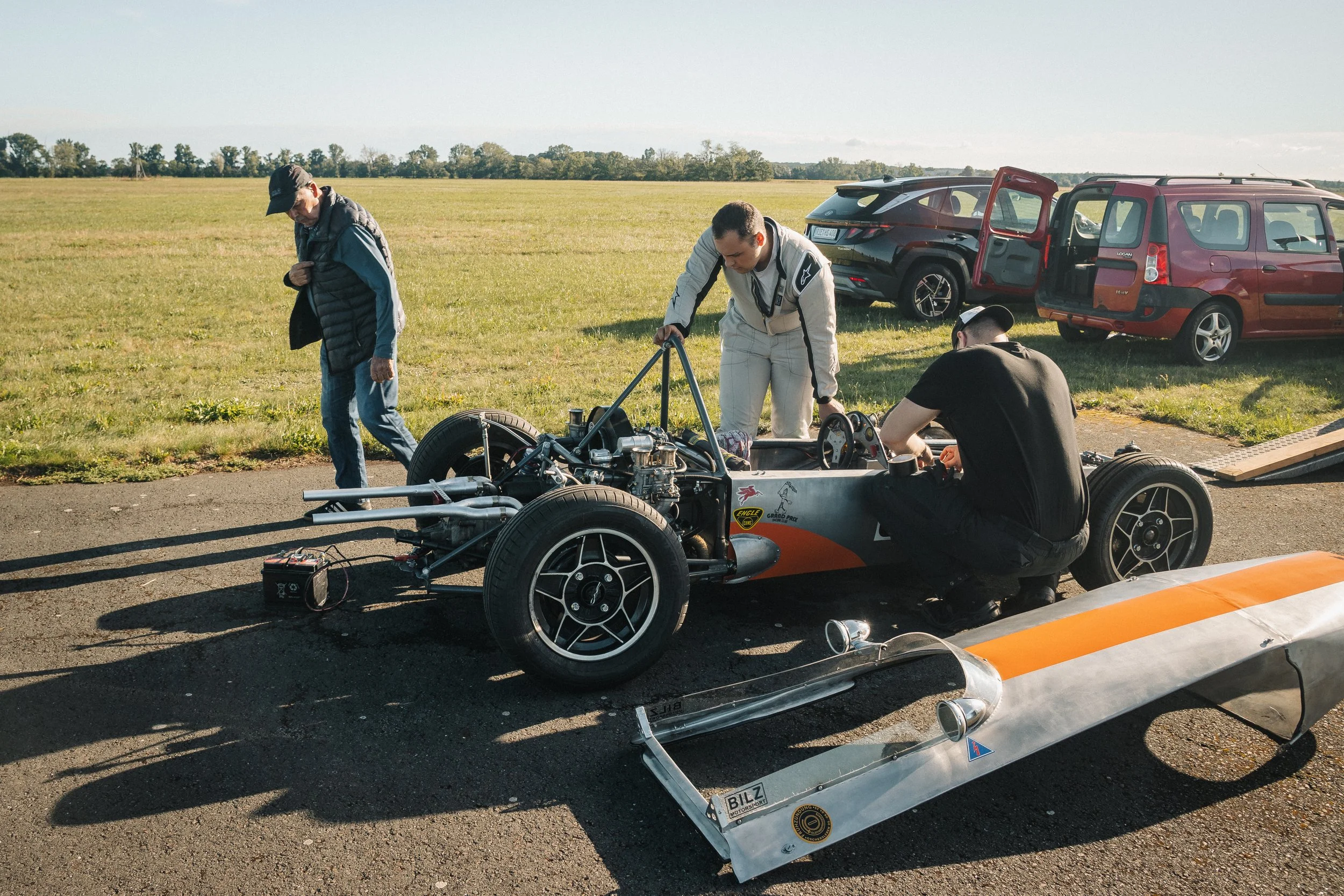
Eines Nachmittags klingelte es an meiner Haustür. Davor stand Leo von Sahr. Einige Jahre zuvor hatten wir Kontakt aufgenommen, weil ich einen seiner historischen Formelwagen fotografieren wollte. Dazu war es, bis jetzt, leider nie gekommen. Nun standen für uns beide Rennveranstaltungen bevor und aus der geplanten Fotosession wurde etwas Besseres: Wir verabredeten uns, unsere Autos gemeinsam zu testen. Leo mit seinem Melkus Typ 64, ich mit dem Bilz M-01.
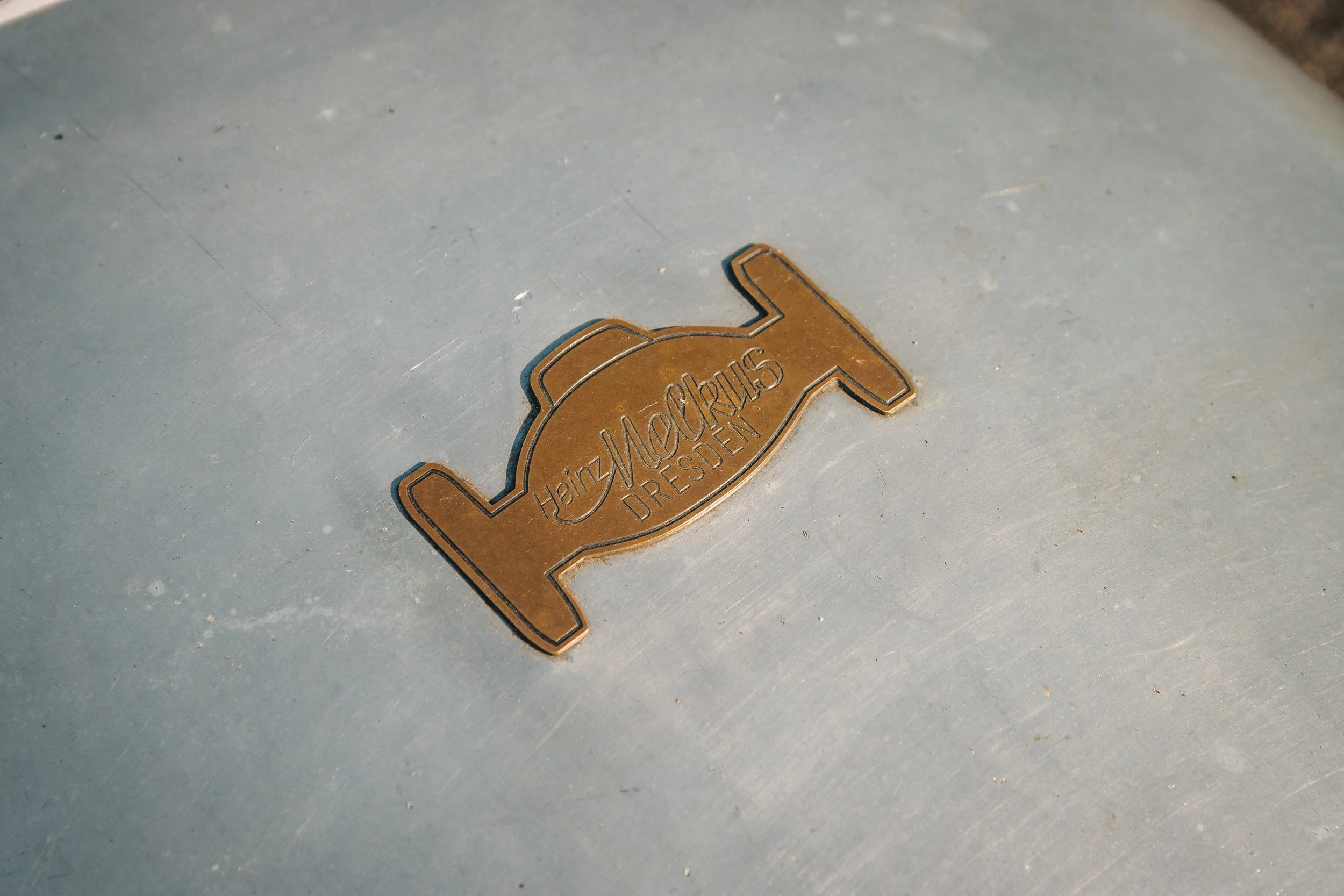
Als beide Wagen nebeneinanderstanden, lagen gut sechzig Jahre Rennwagenbau auf wenigen Metern. Der Melkus stammt aus dem Jahr 1963, Modelljahr 1964. Mein Formelwagen ist dagegen gerade erst am Anfang seiner Geschichte. Der Typ 64 entstand für die damals neue Formel 3 und trat im April 1964 erstmals international in Wien an. Nur eine Woche später folgte seine DDR-Premiere auf der Halle-Saale-Schleife. Heinz Melkus gehörte zu den Fahrern der neuen Konstruktion. In der DDR-Meisterschaft 1964 wurde er Zweiter hinter Max Byczkowski, beide auf Melkus 64. 1967 und 1968 gewann Heinz Melkus selbst die Meisterschaft mit diesem Typ.
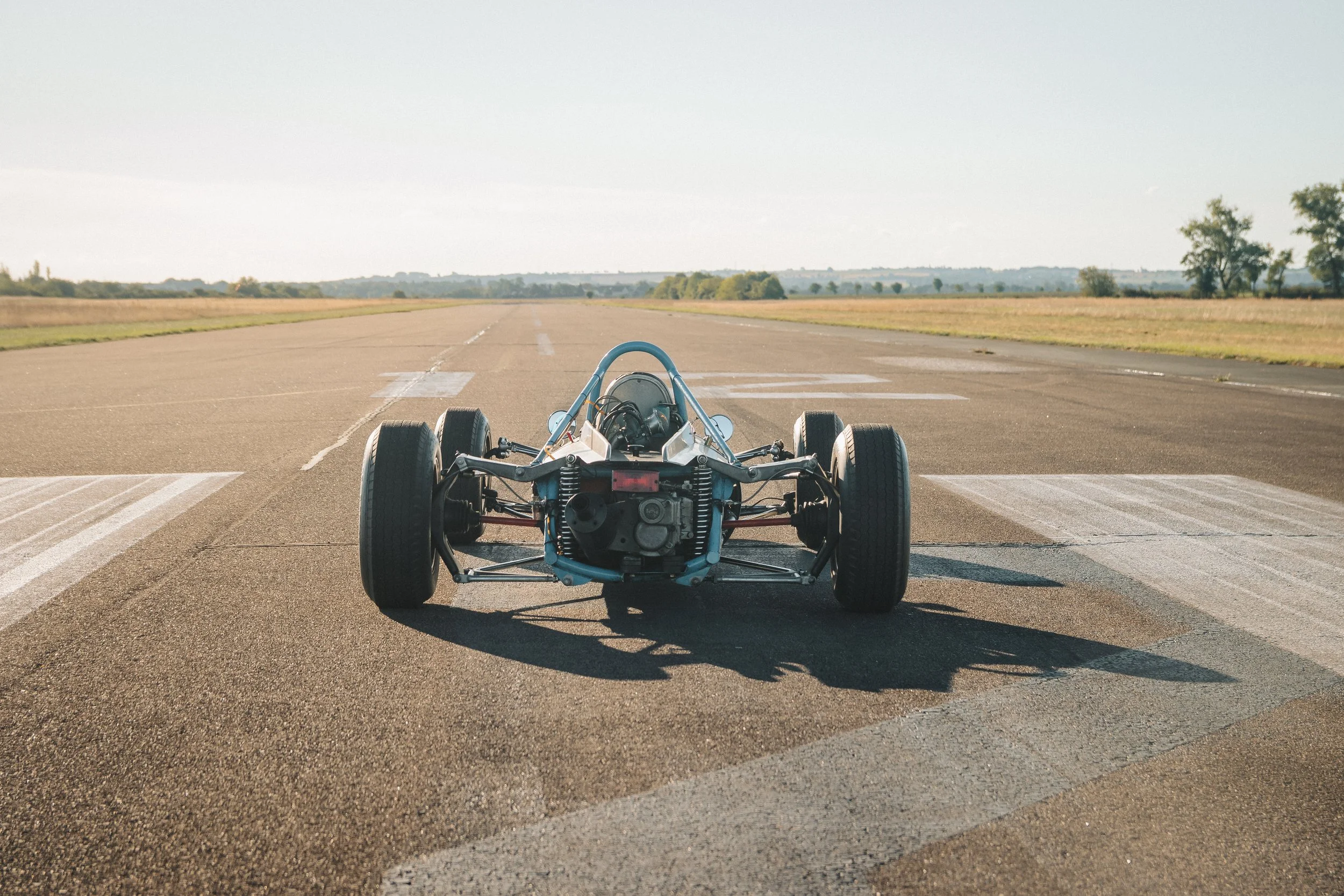
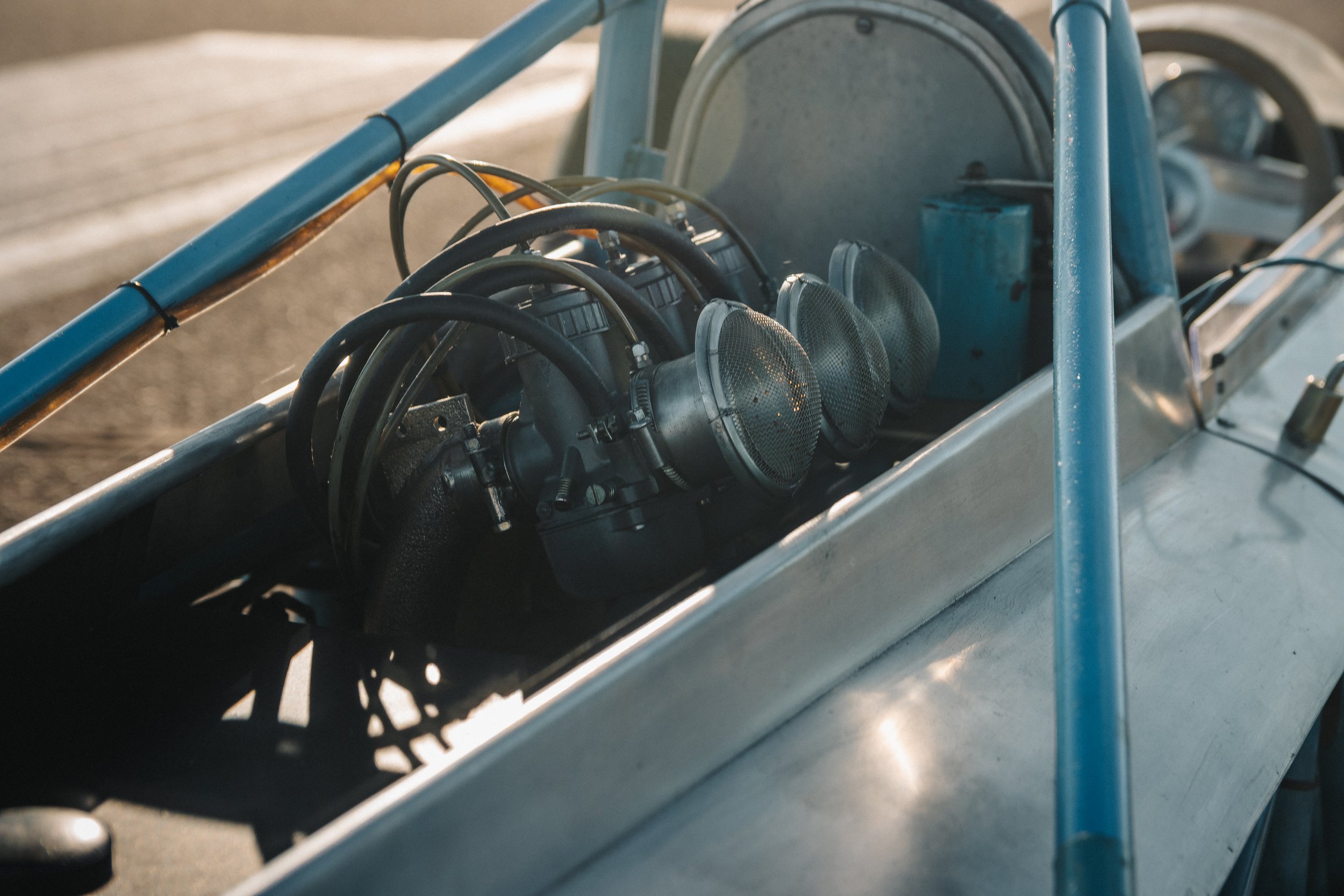
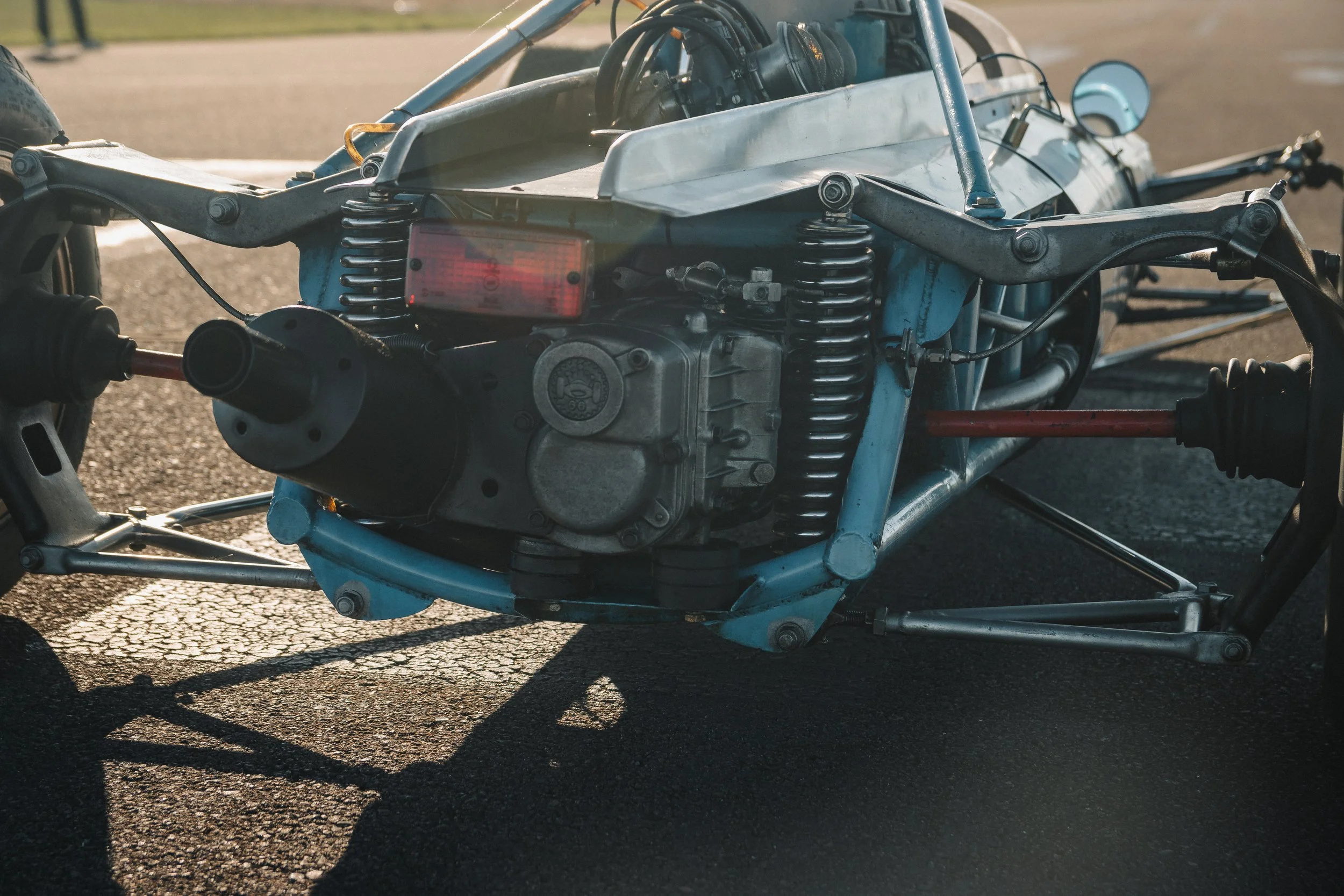
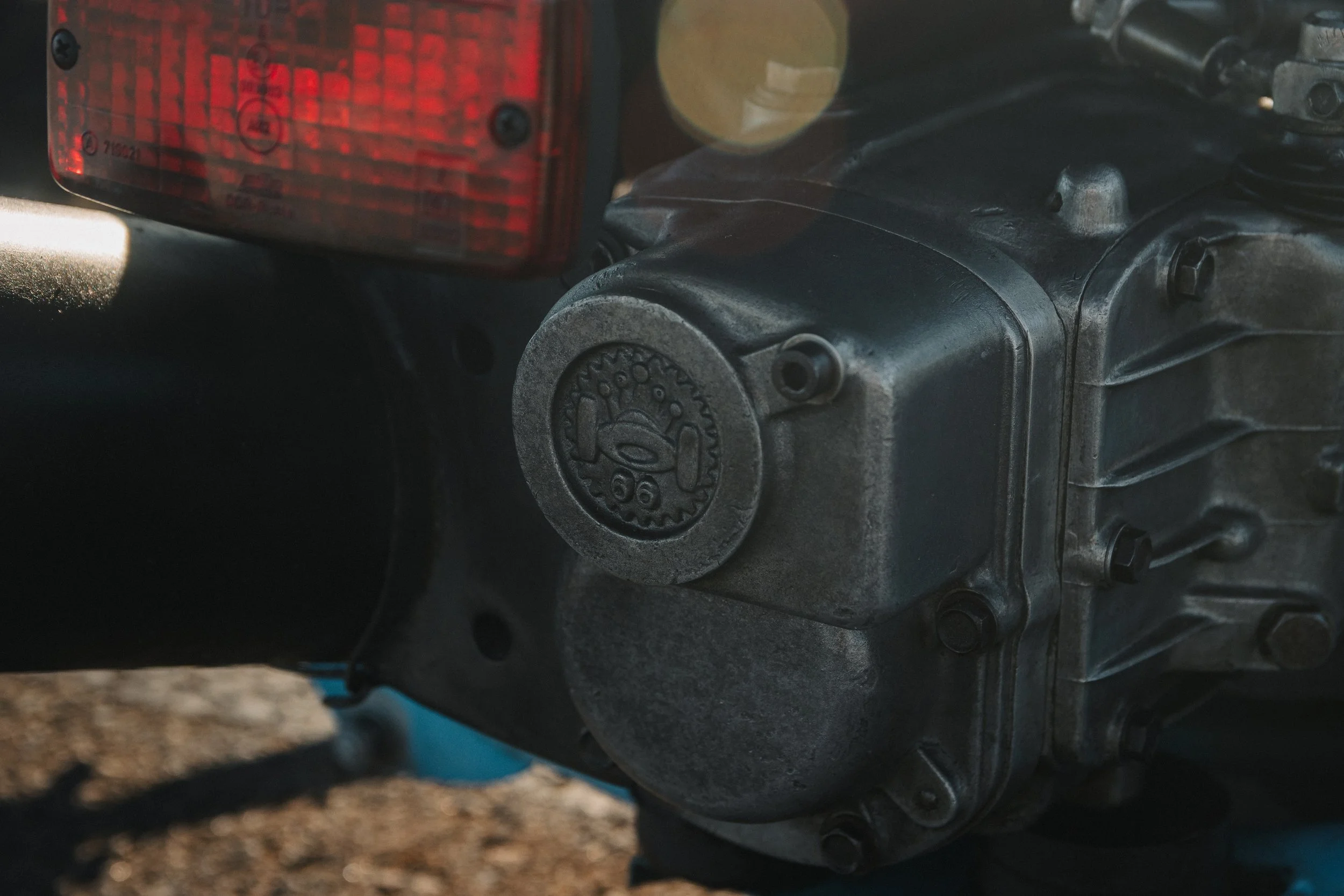
Die Technik erscheint heute beinahe schlicht. Im Wagen arbeitet ein Wartburg-Dreizylinder-Zweitakter mit rund einem Liter Hubraum und in der hier erhaltenen Ausführung etwa 80 PS. Dazu kommen ein Fünfganggetriebe und ein Gewicht von ungefähr 400 Kilogramm. Mehr als 200 km/h waren damit möglich.
Entscheidend ist weniger die reine Leistung als das Verhältnis dazu. 80 PS müssen hier nur etwa 400 Kilogramm bewegen. Fahrer und Maschine sitzen unmittelbar auf der Straße, die Räder stehen frei und die Karosserie umschließt kaum mehr als das, was tatsächlich benötigt wird. Der Typ 64 wurde über Jahre weiterentwickelt; historische Übersichten führen Varianten mit Wartburg-Motoren und Leistungen bis etwa 95 PS.
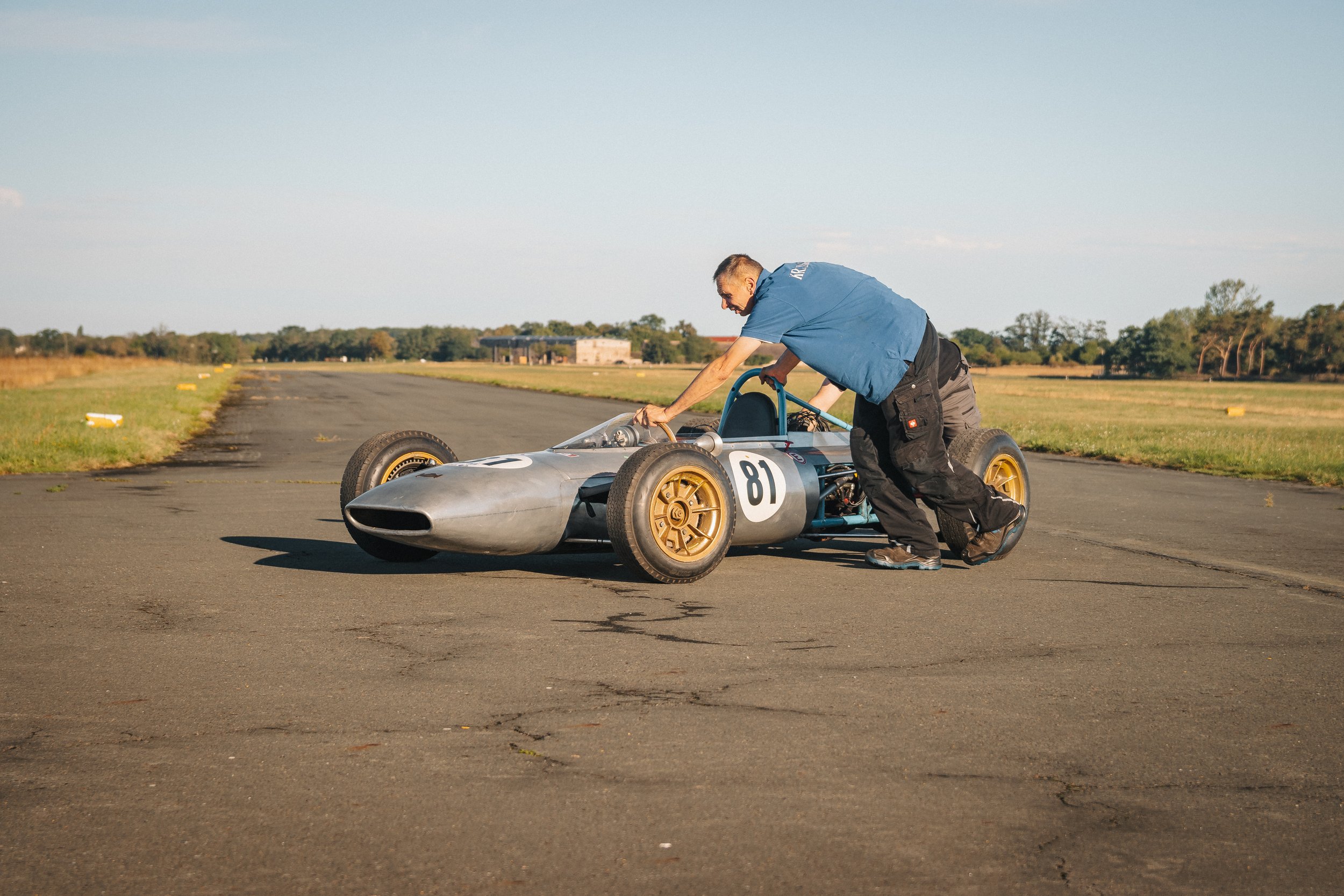
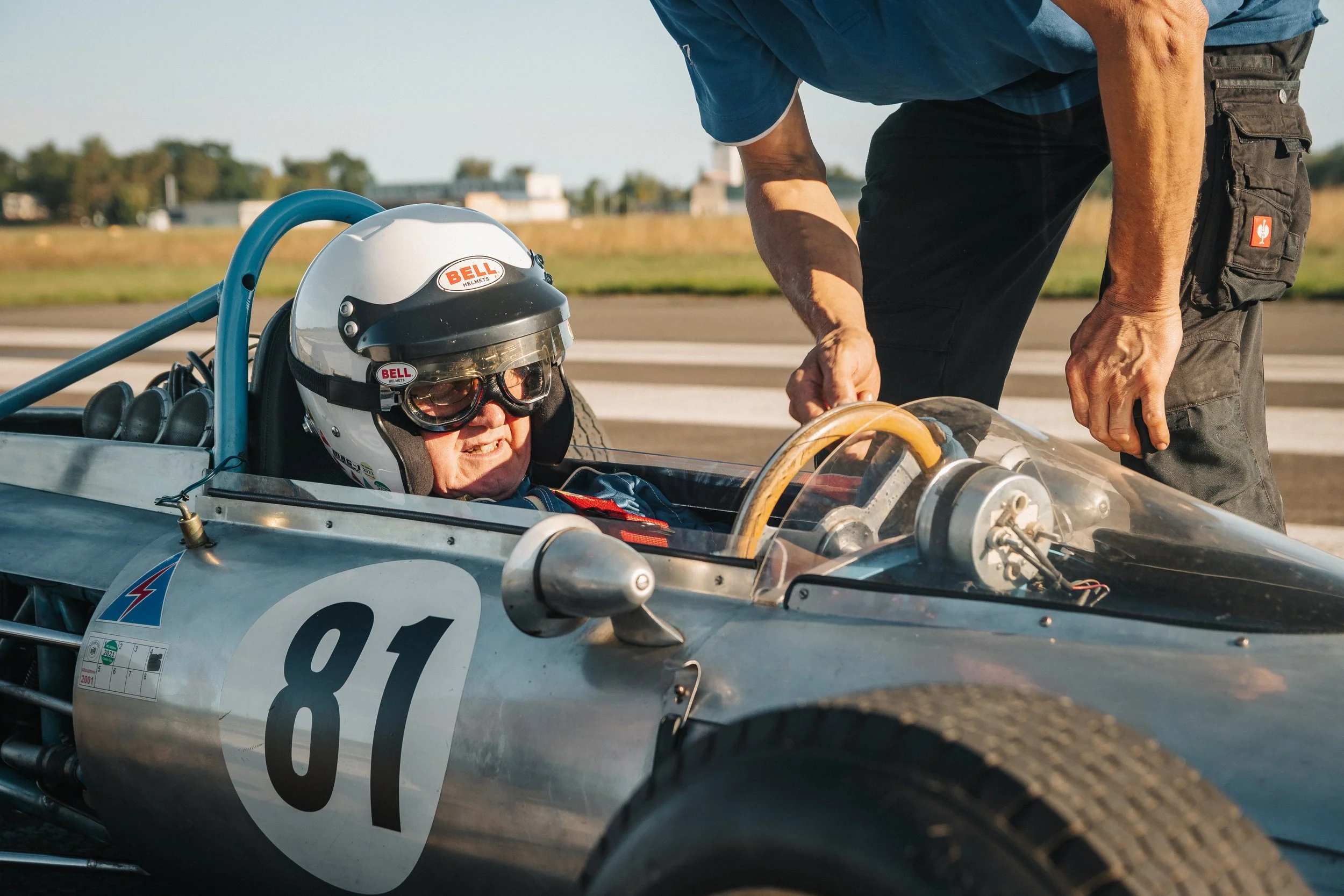
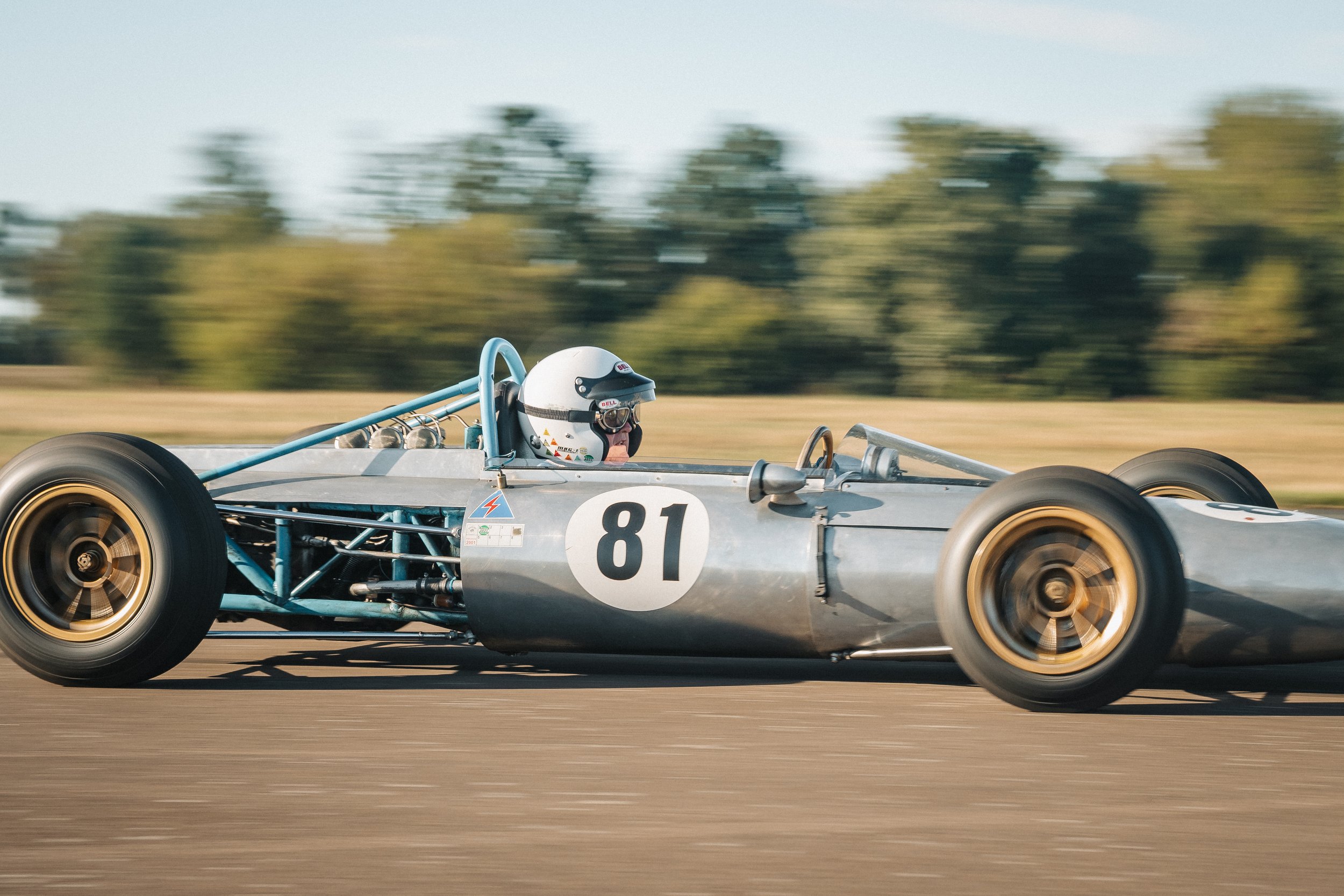
Die Startnummer 81 gehörte dabei tatsächlich zu Heinz Melkus. Sie findet sich sowohl für die Saison 1964 als auch noch 1969 in den historischen Starterlisten am Melkus 64. Das Auto vor uns ist jedoch nicht irgendein erhaltenes Exemplar. Nach seiner Fahrzeugvita wurde genau diese Nummer 81 von Heinz Melkus über viele Jahre eingesetzt. Ulli und Peter Melkus bauten den Wagen 1989 für ihren Vater wieder auf. Erst Jahrzehnte später kam er zu Leo von Sahr. Leo, 1953 unweit des Nürburgrings geboren, war selbst früh vom Motorsport geprägt. Nach der Wiedervereinigung zog er nach Sachsen und kam bereits 1990 mit Heinz, Ulli und Peter Melkus in Kontakt. Es folgten verschiedene historische Rennwagen: ein MT 77, ein Ketten-Melkus Formel Junior, der SEG II und immer wieder englische Konstruktionen von Lotus, Mallock oder Gryphon. Auf den Typ 64 musste er länger warten. 2013 konnte er schließlich die Nummer 81 übernehmen.
Nun stand das Auto vor uns. Nicht wie in einem Museum, sondern bereit für den nächsten Einsatz. Genau deshalb waren wir an diesem Tag hier. Bevor es zu den anstehenden Veranstaltungen ging, mussten beide Autos getestet werden. Wir fuhren versetzt, kontrollierten Technik und Fahrverhalten und wollten vor allem wissen, ob alles so funktionierte, wie es sollte. Beim Melkus blieb dabei vor allem der Motor im Gedächtnis.
Ein Wartburg-Dreizylinder mit 1000 ccm klingt zunächst nicht nach einer besonders dramatischen Angelegenheit. Im Typ 64 ist das Gegenteil der Fall. Mit steigender Drehzahl wird der Zweitakter immer heller und schärfer. Der Motor dreht hoch, der Klang wird beinahe schrill und aus der Ferne hört man den Wagen lange, bevor man ihn wieder sieht. 80 PS spielen in diesem Moment keine Rolle mehr.
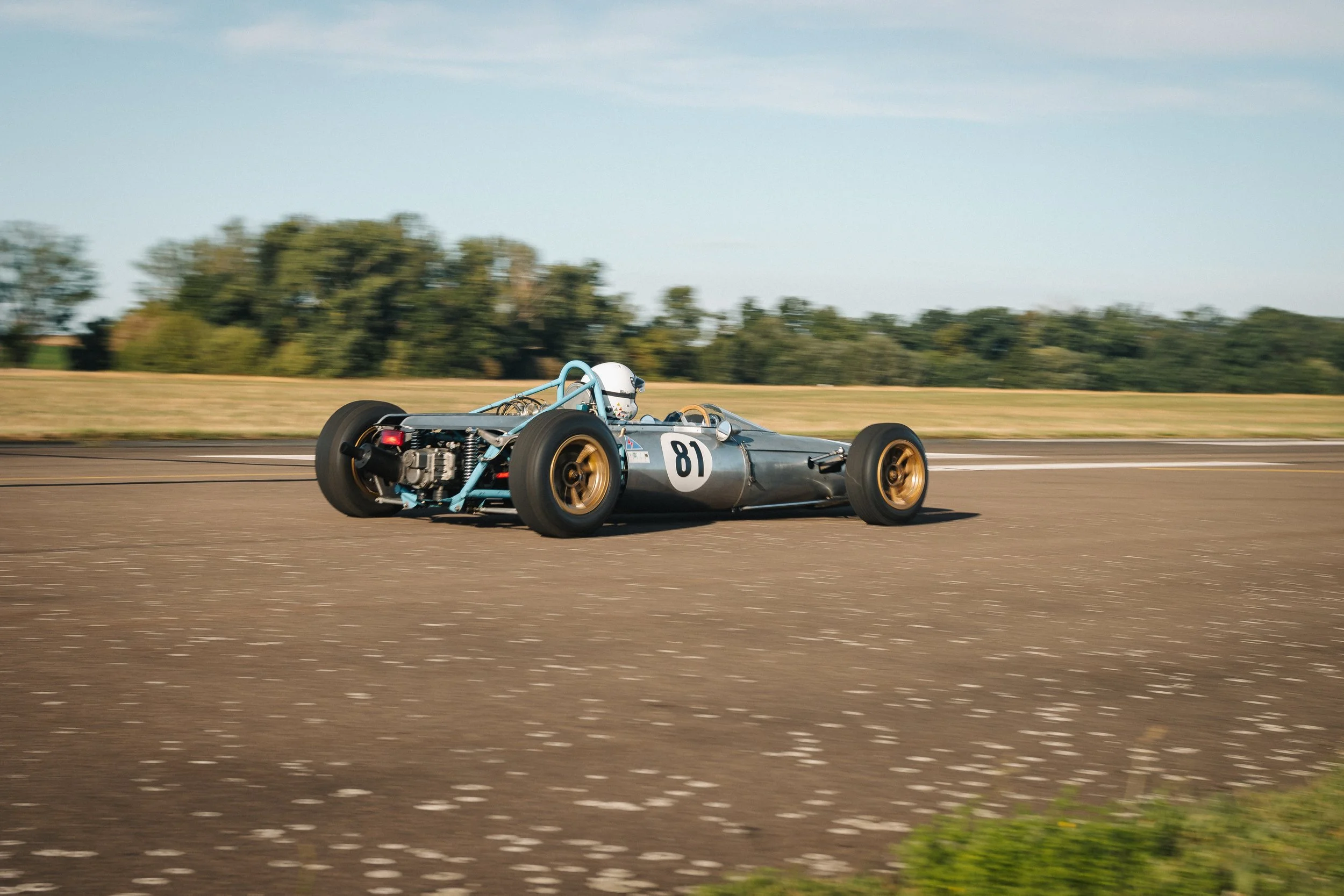
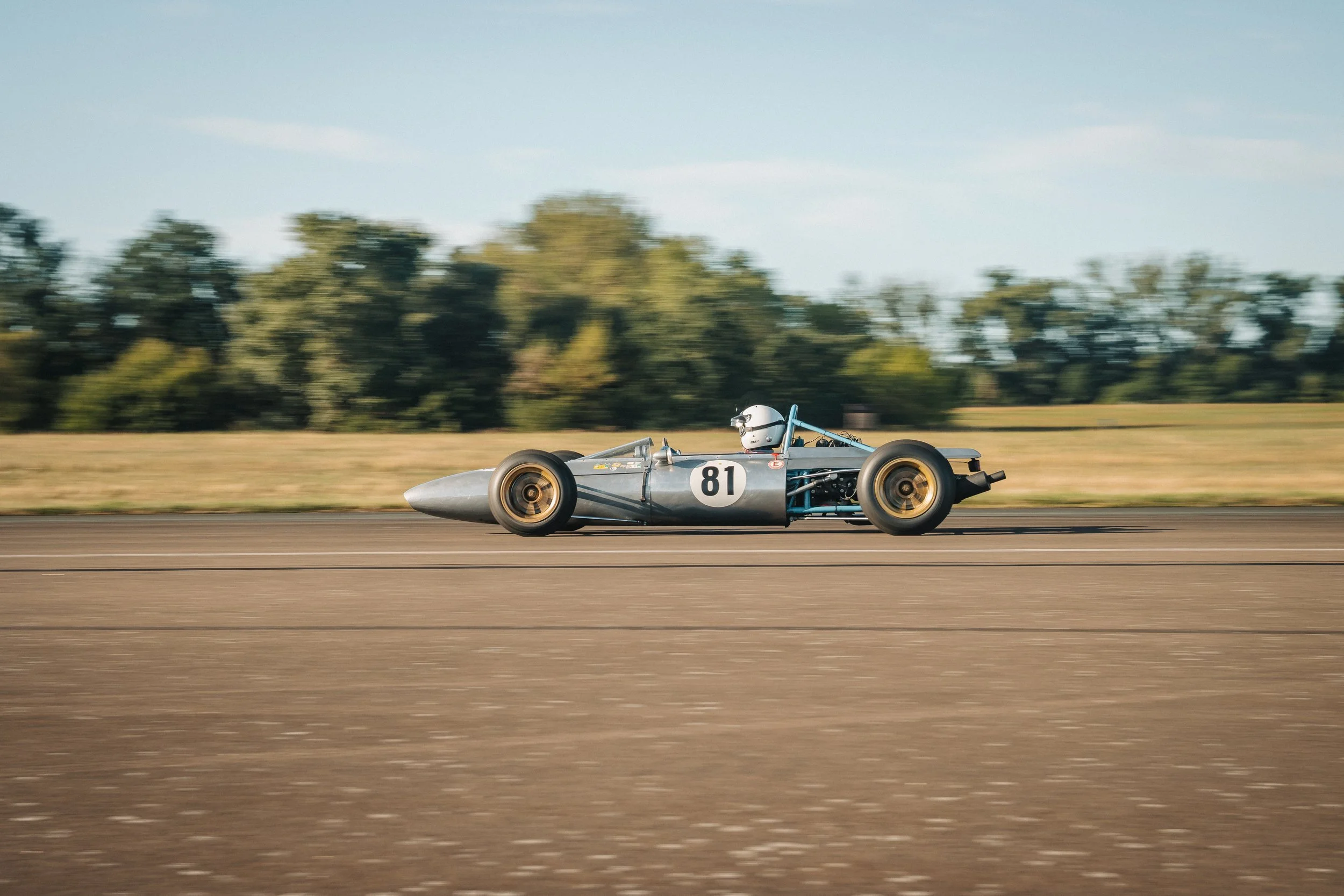
Auch optisch verändert er sich in Bewegung. Im Stand wirkt der Typ 64 klein, in Fahrt vor allem extrem leicht. Die schmale Karosserie, die freistehenden Räder und der unmittelbar hinter dem Fahrer arbeitende Dreizylinder lassen kaum etwas erkennen, das nicht einer Funktion dient.
Danach ging es für mich mit dem M-01 hinaus. Kein gemeinsames Rennen und kein inszeniertes Duell zwischen Alt und Neu. Wir waren beide aus demselben Grund dort: testen, fahren, kontrollieren. Gerade deshalb passten die beiden Wagen erstaunlich gut zusammen. Der eine wurde vor mehr als sechzig Jahren in Dresden gebaut und gewann mit Heinz Melkus Meisterschaften. Der andere entstand Jahrzehnte später als eigener kleiner Formelwagen. Am Ende des Tages standen beide wieder nebeneinander, der Melkus mit einer langen Rennhistorie hinter sich, der M-01 mit seiner noch vor sich.
Und die Nummer 81 wird auch weiterhin nicht nur ausgestellt. Leo setzt den Melkus bis heute bei historischen Motorsportveranstaltungen ein. So, wie es sich für einen Rennwagen gehört.
Number 81
One afternoon, the doorbell rang. Standing there was Leo von Sahr. We had made contact a few years earlier because I wanted to photograph one of his historic formula race cars—something that, until then, had unfortunately never happened. Now, with racing events coming up for both of us, the planned photo session turned into something even better: we arranged to test our cars together—Leo with his Melkus Type 64, and I with the Bilz M-01.
When the two cars stood side by side, a good sixty years of race car engineering spanned just a few meters. The Melkus dates back to 1963 (model year 1964), whereas my formula car is just at the beginning of its story. The Type 64 was created for the then-new Formula 3 class and made its international debut in Vienna in April 1964. Just a week later, it made its East German debut at the Halle-Saale-Schleife circuit. Heinz Melkus was one of the drivers of this new design; he finished second in the 1964 East German Championship behind Max Byczkowski—both driving the Melkus 64. Heinz Melkus went on to win the championship himself in 1967 and 1968 using this model.
By today’s standards, the engineering seems almost simple. The car is powered by a Wartburg three-cylinder, two-stroke engine with a displacement of around one liter, producing approximately 80 hp in this particular configuration. It features a five-speed gearbox and weighs roughly 400 kilograms. Top speeds of over 200 km/h were possible.
What matters most is not raw power, but the power-to-weight ratio; here, 80 hp only has to move about 400 kilograms. Driver and machine sit right down on the road, the wheels are exposed, and the bodywork encloses little more than what is strictly necessary. The Type 64 underwent continuous development over the years; historical records list variants featuring Wartburg engines with outputs of up to around 95 hp. The race number 81 actually belonged to Heinz Melkus. It appears on the Melkus 64 in historical entry lists for both the 1964 and 1969 seasons. However, the car before us is not just any surviving example; according to its vehicle history, this specific "number 81" was campaigned by Heinz Melkus for many years. Ulli and Peter Melkus rebuilt the car for their father in 1989. It wasn't until decades later that it came into the possession of Leo von Sahr. Born in 1953 not far from the Nürburgring, Leo was shaped by motorsport from an early age. After reunification, he moved to Saxony and made contact with Heinz, Ulli, and Peter Melkus as early as 1990. A succession of historic race cars followed: an MT 77, a chain-drive Melkus Formula Junior, the SEG II, and—time and again—British designs from Lotus, Mallock, or Gryphon. He had to wait longer for the Type 64; finally, in 2013, he was able to acquire number 81.
Now, the car stood before us—not as a museum piece, but ready for action. That was precisely why we were there that day. Before the upcoming events, both cars needed to be tested. We drove in a staggered formation, checking the mechanics and handling, and—above all—wanted to ensure everything was functioning as it should. With the Melkus, it was the engine that left the most lasting impression.
A 1,000 cc Wartburg three-cylinder engine might not sound like a particularly dramatic affair at first. In the Type 64, however, the reality is quite the opposite. As the revs rise, the two-stroke engine’s note becomes increasingly high-pitched and sharp. The engine winds up, the sound turns almost shrill, and you can hear the car from afar long before you see it again. At that moment, the 80 hp output no longer matters.
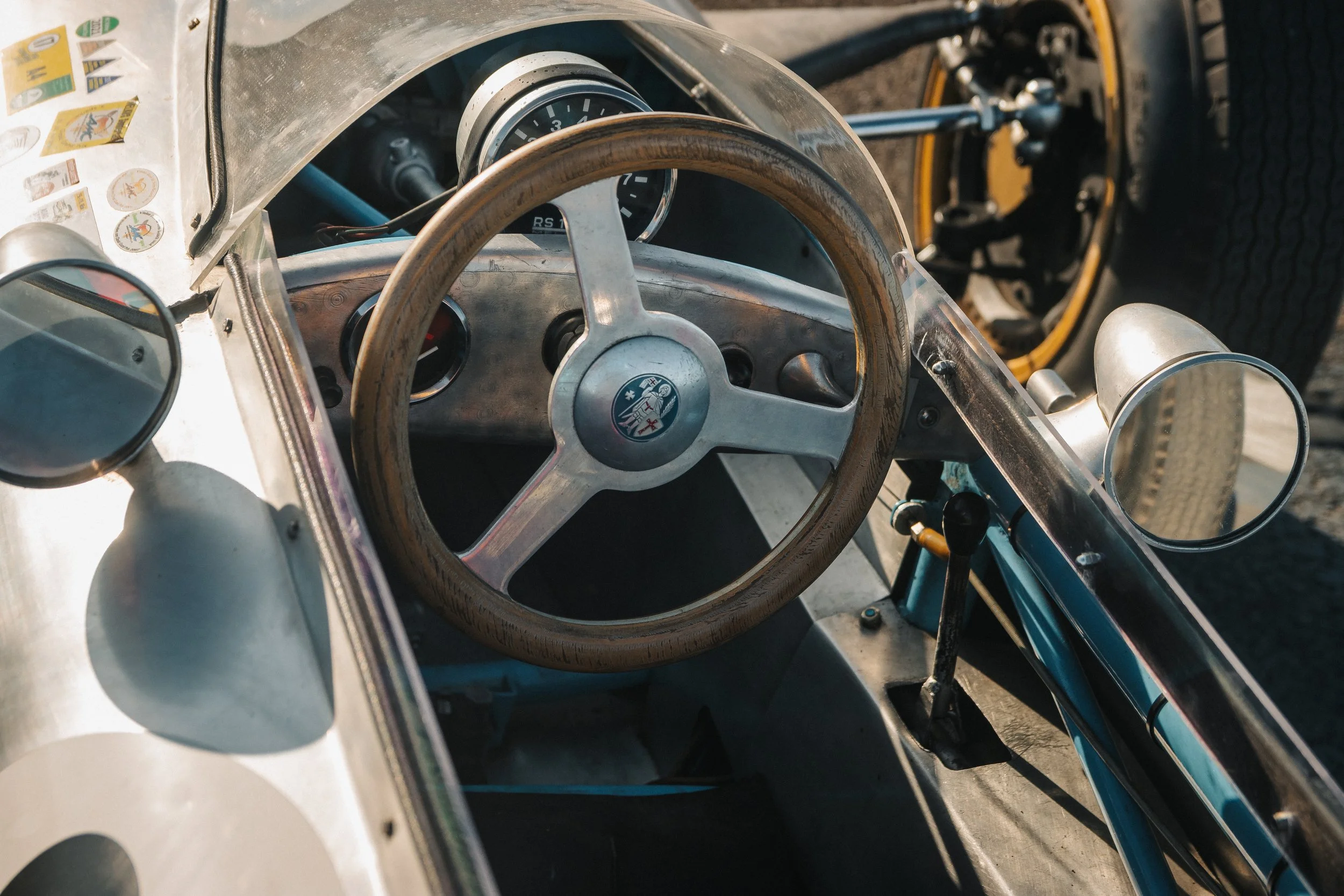
Its visual character changes when in motion, too. At a standstill, the Type 64 looks small; on the move, it appears—above all—extremely lightweight. With its narrow body, open wheels, and a three-cylinder engine positioned directly behind the driver, there is hardly a single element that does not serve a specific function.
Next, I took the M-01 out for a run. There was no head-to-head race, nor any staged duel between old and new. We were both there for the same reason: to test, to drive, and to evaluate. That is precisely why the two cars complemented each other so well. One was built in Dresden over sixty years ago and won championships with Heinz Melkus; the other was created decades later as a bespoke small formula car. At the end of the day, the two stood side by side once more—the Melkus with a long racing history behind it, the M-01 with its own still ahead.
And car number 81 isn't just for show, either; Leo continues to race the Melkus at historic motorsport events to this day. Just as a race car should be used.